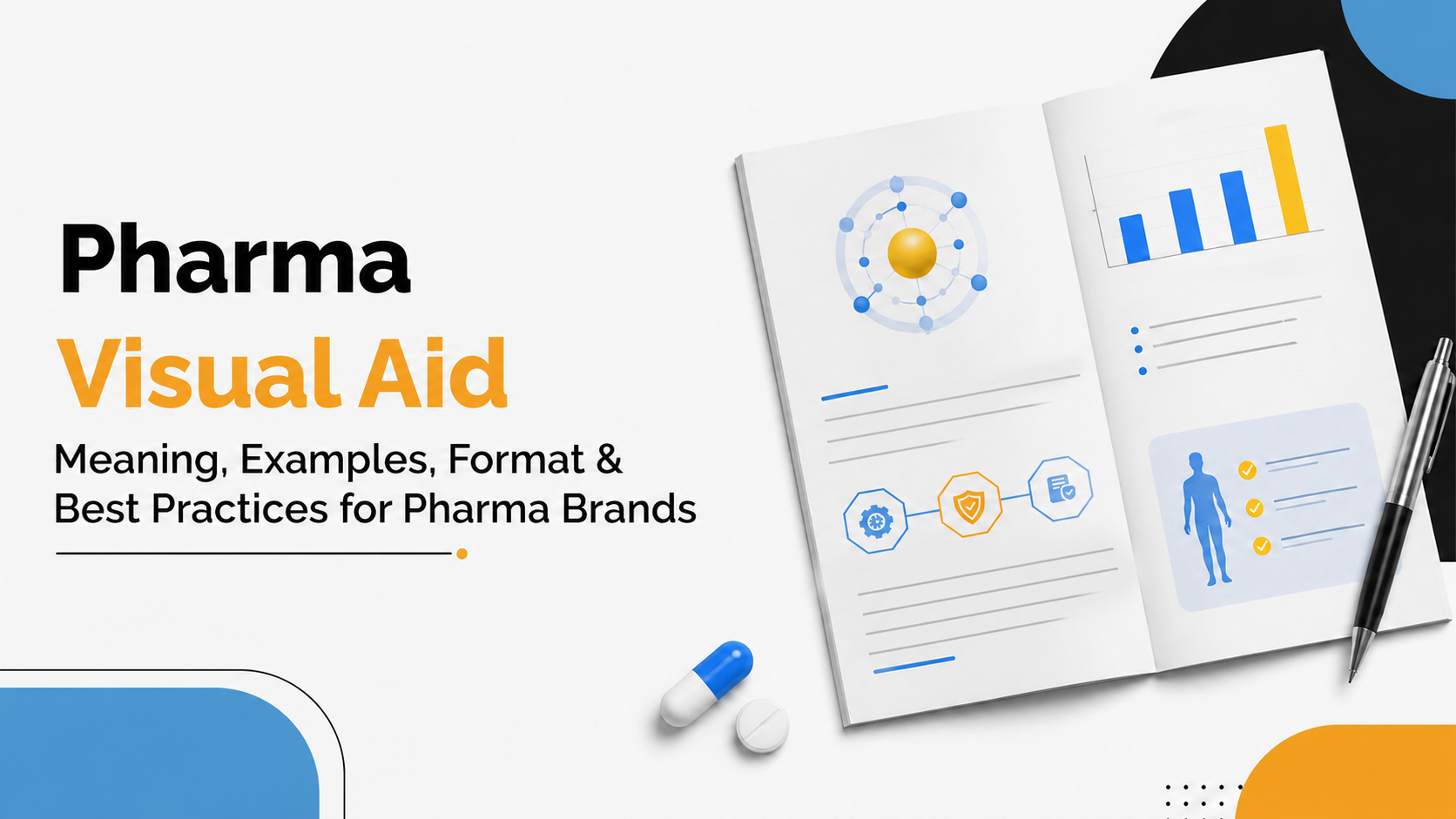
A pharma visual aid is one of the most important communication tools used by a medical communication agency to simplify scientific information and support pharma brand communication. It helps medical representatives, product managers, brand managers, and medical communication teams explain product information to doctors and healthcare professionals in a clear, scientific, and engaging way. In today’s competitive pharma market, doctors have limited time for product discussions. A well-structured pharma visual aid helps simplify complex medical information, present clinical evidence, highlight product benefits, and create better brand recall. Whether used as a printed booklet, digital presentation, e-visual aid, or tablet-based detailing tool, it plays a key role in doctor engagement and pharma brand communication. This guide explains the meaning of pharma visual aid, its format, examples, key components, design best practices, and compliance checklist for pharma brands. What Is a Pharma Visual Aid? A pharma visual aid is a printed or digital medico-marketing tool used by medical representatives to explain a medicine, therapy, formulation, medical device, nutraceutical, or healthcare product to healthcare professionals. Since a visual aid includes clinical evidence, dosage, safety information, references, and brand messaging, it should be developed with strong scientific content writing services. It usually includes the brand name, generic name, composition, indication, mechanism of action, dosage, clinical data, product benefits, safety information, references, and prescribing details. These details are presented using medical copy, charts, infographics, illustrations, product visuals, and structured brand messaging. Pharma Visual Aid Meaning in Medical Marketing In pharma marketing, a visual aid works as a communication bridge between the brand and the doctor. Instead of only speaking about a product, the medical representative can use visual pages to explain the product story step by step. For example, a good visual aid can show the disease burden, patient need, product composition, mechanism of action, clinical evidence, dosage schedule, and safety profile in a visually appealing format. This makes the conversation more professional, scientific, and easy to understand. A strong pharma visual aid not only explains the product but also supports strategic brand positioning by turning product science into a clear doctor-facing message. Who Uses Pharma Visual Aids? Pharma visual aids are commonly used by: For product managers, the visual aid helps convert brand strategy into field communication. For medical representatives, it becomes a guided doctor-detailing tool. For doctors, it helps quickly understand the product’s value, clinical relevance, and patient suitability. Pharma Visual Aid vs Brochure vs LBL Many people confuse pharma visual aids with brochures, LBLs, and reminder cards, but each has a different role. A pharma visual aid is mainly used during doctor detailing. It helps the medical representative explain the product through a structured flow. A brochure is usually a general promotional or educational document used for doctors, patients, or distributors. An LBL, or leave behind literature, is given to the doctor after the visit. It usually summarizes the key product message, benefits, dosage, and references. A product reminder card is a smaller tool used to keep the brand name and key message visible in the doctor’s clinic. A strong pharma campaign may use all of these tools together for better recall and engagement.Pharma brands often combine visual aids, brochures, LBLs, and other medico-marketing collaterals to improve product recall across doctor interactions. Why Are Visual Aids Important in Pharma Marketing? Visual aids are important because pharma marketing requires clear, accurate, and scientific communication. Doctors are busy, and medical representatives often get only a few minutes to explain a product. A well-designed visual aid helps make that short conversation more focused and impactful.Visual communication is especially useful in healthcare because research shows that visual-based health communication can improve health literacy and the comprehension of health-related information. They Improve Doctor Detailing A pharma visual aid gives medical representatives a clear flow for doctor interaction. Instead of discussing random product points, the representative can follow a logical sequence: disease need, product introduction, mechanism of action, clinical evidence, benefits, dosage, safety, and closing message. This improves the quality of doctor detailing and helps the representative communicate with confidence. They Simplify Complex Medical Information Pharma products often involve complex details such as mechanism of action, clinical trial data, endpoints, dosage, contraindications, and patient selection. A visual aid simplifies this information through charts, icons, diagrams, and medical illustrations. For example, a mechanism of action can be explained better through a visual pathway than through a long paragraph of text. They Improve Product Recall A strong pharma visual aid improves brand recall by repeating the core product message through visuals, colors, claims, icons, and structured storytelling. When the same message is presented consistently, doctors are more likely to remember the brand. This is especially important in competitive therapy areas where many products have similar compositions. They Maintain Field Force Consistency In pharma marketing, consistency is very important. Every medical representative should communicate the same approved product message. It ensures that the product benefits, clinical evidence, dosage, and safety information are presented in a controlled and approved way. Key Components of a Pharma Visual Aid An effective pharma visual aid should include all important medical, promotional, and compliance elements. The exact structure may change based on the product and therapy area, but most visual aids include the following sections. Brand Name and Generic Name The brand name should be clearly visible on the cover page and repeated naturally throughout the visual aid. The generic name or active pharmaceutical ingredient should also be mentioned where required. Composition or Salt Name This section explains the active ingredient, strength, formulation, and dosage form. For example, a tablet visual aid may mention the salt name and strength, while a dermatology product visual aid may include topical ingredients and formulation details. Indication and Target Patient Profile The indication section explains the approved use of the product. It should also describe the target patient profile in a practical and compliant way. For example, a diabetes product visual aid may focus on patients needing better glycemic control, while a dermatology visual aid may focus on patients … Read more