Hemophilia

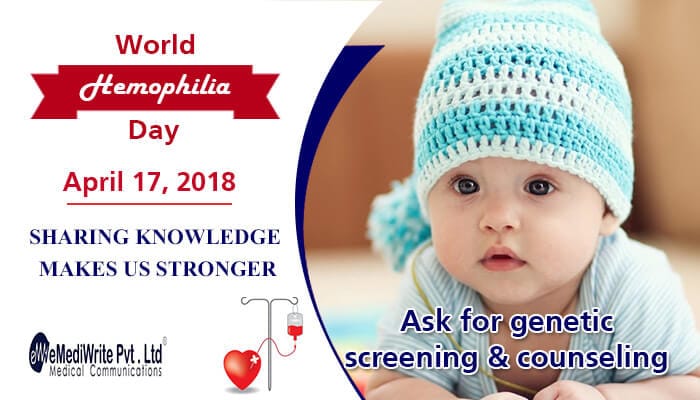
What is Hemophilla Hemophilia is not one disease but rather one of a group of inherited bleeding disorders that cause abnormal or exaggerated bleeding and poor blood clotting. About one in 10,000 people are born with this disease. It happens because of a defect in one of the clotting factor genes on the X chromosome. Types The three forms of hemophilia are hemophilia A, B, and C. Symptoms Diagnosis Blood tests can provide information about how long it takes for blood to clot, the levels of clotting factors, and which clotting factors, if any, are missing. Treatment Hemophilia A can be treated with a prescription hormone. This hormone is called desmopressin, which they can give as an injection into your vein. This medication works by stimulating the factors responsible for the process of blood clotting. Hemophilia B can be treated by infusing your blood with donor clotting factors. Sometimes, the factors may be given in the synthetic form. These are called “recombinant clotting factors.” Hemophilia C can be treated by using plasma infusion. The infusion works to stop profuse bleeding. Living with hemophilia This condition isn’t curable, but it can be treated to minimize symptoms and prevent future health complications. These include: Every year, April 17 is celebrated as World Hemophilia Day. This year’s theme is “SHARING KNOWLEDGE MAKES US STRONGER”.

Factors that influence the market cap of pharmaceutical companies

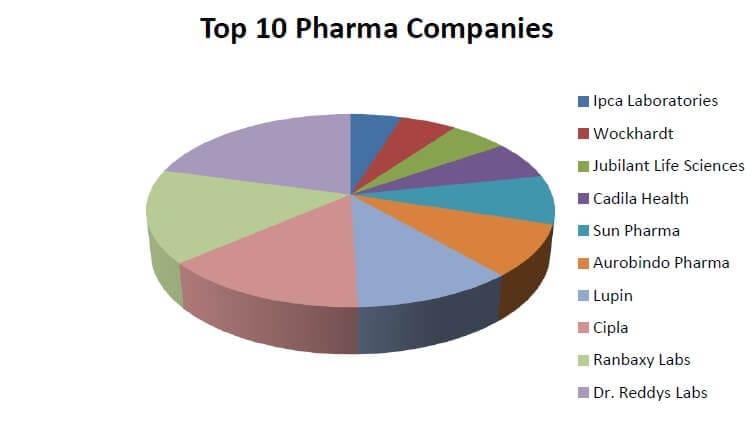
The global Pharmaceutical industry is one of the most dynamic, turbulent and complex economic space in the modern times. A typical Pharmaceutical company invests millions in research & development, therefore sound knowledge of the global trends of the factors affecting the market capitalization are important in strategizing business advancement: 1) Research & Development: According to Pharmaceutical Manufacturers Association, the leading expenditure in this industry is on research & development. After the trials, the company gets one year’s patent protection before the competitors are allowed the rights to manufacture and market equivalent drugs at half the price. 2) The patient-first business model: This model is increasingly being preferred over the traditional approach of sales regulation through health practitioners. With digital media providing health awareness in a click, more emphasis is being given on individual patient collaboration and effective communication. Pharmaceutical data analytics are becoming more relevant to regulate commercial success. 3) Introduction of biosimilars: The rapid Introduction of biosimilars has made the market tenfold times competitive. Drugs for debilitating disorders are made available at much cheaper pricing than the pricing of the patent companies. 4) Precision medicines: Pharmaceutical companies are investing massively on precision medicines, as trial and error procedural costs are eliminated and target-based concise treatment strategy is ensured, tailor-made to the patient’s requirements. 5) The digitalization of the health care sector: Starting from electronic records to genome mapping, digitalization has phenomenally revolutionized the industry. Mobile health sensors and wearable devices, offers end to end monitoring of a patient’s progress. 6) Government Regulations & Marketing: Over the decade, the demand for heavily marketed lifestyle drugs has increased consumer acceptance. There is massive demand for drugs that are claimed to enhance preventive approach and improve the quality of life. Therefore, effective marketing and sales strategy to target lifestyle drugs are on the go. Incorporation and careful consideration of all these factors are imperative for the strategic pricing and market cap monitoring of the pharmaceutical industry.

Taking Pride in Providing Outstanding Quality at the Appropriate Time

A professional portrait of Dr. Kamal Asnani standing in a modern office, wearing a suit and glasses. The image includes a desk with books, a tablet showing a medical graph, and large windows with a city view.

Since 2016, eMediWrite has been providing customers with medical marketing and scientific solutions through a wide range of print, electronic, and digital communication channels. Additionally, they serve as a source for original scripts written by researchers, scientific literature research, textbook content, book chapters, editing manuscripts before submission to journals, and publishing preparation. Dr. Kamal Asnani, the founder and CEO of eMediWrite, is a former non-resident Indian who graduated from the University of the West Indies with an MBBS in 1994, and returned to India after successfully practising medicine in Kingston, Jamaica, for seven years. He engaged in numerous commercial endeavours while he was in India, each of which added to his knowledge and experience and set the path for him to significantly advance the field of medicine and healthcare through strategic communications. He is best characterised as a learning machine and thrives on various self-development themes with a wide range of interests. His daily activities are guided by the key ideals of good corporate governance, sustainability, transparency, and thought leadership. His goal is to keep paving the route to a promising future with a history of solid alliances with industry titans in pharmaceuticals and healthcare. He believes that India as a nation has great potential, not just in the healthcare industry but in many other important fields as well. According to Dr. Asnani, we hope that the right people are given the opportunity to serve the country in a meaningful way. By providing thorough healthcare communications, eMediWrite seeks to empower mankind and establish enduring bonds with its customers. Because the circumstances are so favourable for learning, Dr. Asnani is a strong proponent of expanding one’s knowledge base. eMediWrite has a very strong medical command in the market thanks in part to having a medical degree holder at the helm. The company has been able to deliver the synergy that helps the industry in a significant way by partnering and forming strong relationships with other leaders, deepening the significance of eMediWrite’s journey. Their top priority is customer satisfaction. Today, eMediWrite is a success story that would not be feasible without the help of the loyal customers and committed staff members who have travelled along for the fantastic ride so far. The business is eager to support and interact with them in the future, along with other stakeholders. The organisation places a high priority on its duty to the clients it serves, funding efforts that are centred on the newest technology as well as introducing programmes that cover all facets of the healthcare industry.

Essentials of Medical Writing

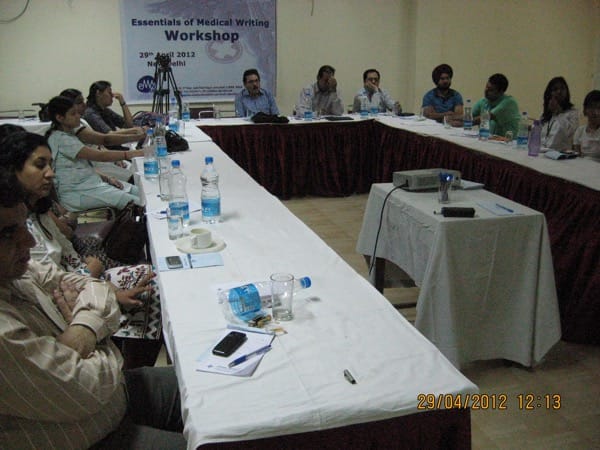
Workshop The workshop featuring interactive sessions, presentations, case studies and interactive exercises has been organized by Emediwrite and attended by executives from top MNCs in the pharmaceutical sector. The eminent speaker of this workshop is the Lead Faculty in Pharmaceutical Sciences at Web Med Central, UK and also a scientific and business head of International Cooperation Association for Research and Development (ICARD). It was a full day successful event organized by us.